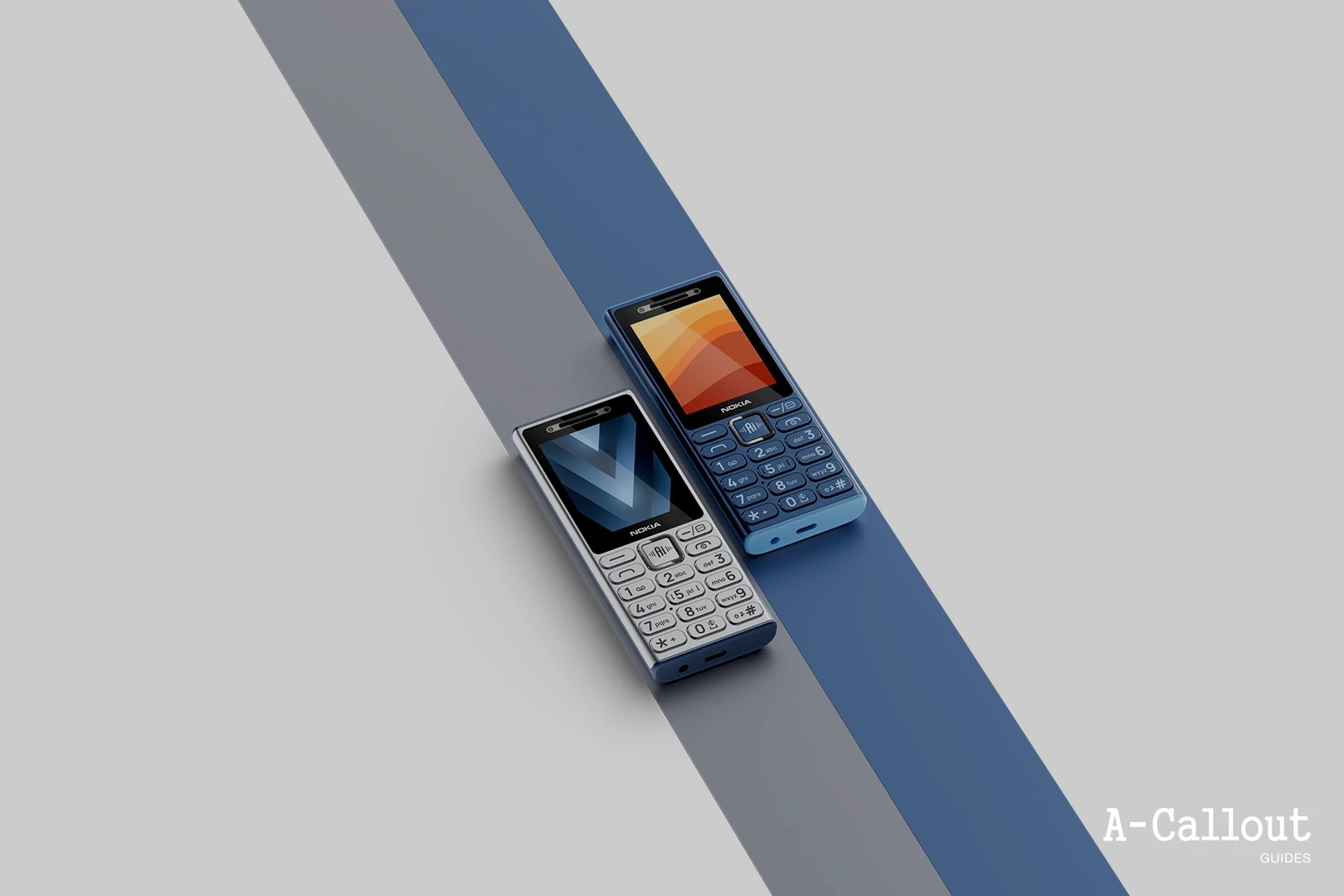
The question behind HMD's latest Nokia 4G feature phones is simple: can a phone still feel like a dumb phone if it has an AI button? For anyone looking at the Nokia 200 4G, Nokia 210 4G, Nokia 215 4G 2nd Edition, or Nokia 235 4G 2nd Edition, the tension is hard to miss. These are keypad phones built around the familiar appeal of physical buttons, small screens, long battery life, FM radio, USB-C charging, Bluetooth, a headphone jack, and basic 4G connectivity. They appear to promise less distraction, fewer apps, and a more deliberate relationship with technology.
That is precisely why the dedicated AI assistant button feels so conceptually awkward. The feature, powered by Sikey AI, handles voice commands for simple actions: making calls, setting alarms, adding reminders, opening the camera, or answering basic queries. In functional terms, this is not the same as a full smartphone assistant. In design terms, it changes the meaning of the object.
The modern feature phone has become more than a low-cost communication tool.
For many users, it represents refusal: refusal of app overload, infinite feeds, and the expectation that every device should become smarter and more service-driven over time. Its value is not only that it does less, but that it does less on purpose. The physical keypad, compact display, removable battery, FM radio, and headphone jack all support that idea. They make the phone feel bounded, legible, and finite.
An AI button introduces a different logic.
It suggests that even a device defined by limits needs intelligent automation, cloud-connected assistance, and voice-driven convenience. The result is not quite a smartphone and not quite a classic feature phone. It is a hybrid object that borrows the aesthetics of digital restraint while quietly reintroducing the service economy it seems to stand apart from.
This is where the design conflict matters more than the feature list.
A voice assistant that sets a reminder or switches on a torch may be useful, but usefulness is not the only measure of good product design. In a feature phone, restraint is part of the product's identity. Every added capability has to be judged against the reason someone might choose such a phone in the first place. If the appeal is clarity and escape from smartphone habits, then an AI layer risks making the device feel less principled.
The reported subscription model sharpens that contradiction.
The AI assistant is described as free for an initial 180-day period, after which continued use requires a paid plan. Feature phones are often valued for predictability and low ongoing commitment. A subscription attached to an AI button reframes the phone less as a self-contained object and more as an access point to a continuing service. For a category associated with affordability and independence from app ecosystems, that shift is significant.
HMD's broader strategy is understandable.
These Nokia-branded phones run S30+, support dual SIM use, include 1,450mAh removable batteries, and add features such as cloud phone services and Xpress Chat for video calls and voice messages. The goal appears to be modernization without abandoning the recognizable Nokia feature phone form. In practical terms, 4G support, USB-C, and basic connected services make a keypad phone more usable today.
But modernization is not neutral.
The more a feature phone adopts the habits of smartphone culture, the more fragile its distinction becomes. A USB-C port solves a real usability problem without changing the device's philosophy. A headphone jack and FM radio reinforce its independence. An AI assistant button, by contrast, signals participation in a broader trend: every interface becoming conversational, every device becoming a service surface, every product asked to justify itself through intelligence.
The skeptical reaction to these phones is not simply that AI on a feature phone is unnecessary.
It is that the feature feels out of place in a category whose strongest contemporary appeal is intentional limitation. A dumb phone does not need to be primitive. It can have 4G, Bluetooth, USB-C, and practical tools. But it does need a coherent idea of what it is refusing.
The Nokia AI feature phones reveal a larger problem in personal technology design.
Companies increasingly recognize that people want calmer devices, but they struggle to leave calmness alone. Instead, they package minimalism as a style while preserving the same underlying assumptions of smart ecosystems: cloud access, subscriptions, assistants, and frictionless convenience. The result is minimalism as a negotiating posture rather than a conviction.
HMD's new Nokia lineup is less a digital detox phone than a compromise object.
It wears the familiar signs of the feature phone well: the candy-bar shape, the physical keys, the compact screen, the basic utilities. Yet the AI button complicates the promise. It does not simply add a shortcut. It asks a device built around doing less to participate in the very culture of more.
July 30, 2026
Related Article