Burger King's Le Nugguette raises a simple question: why would a fast food chain make a handbag too small to function as one? The answer is not about storage, or even chicken nuggets. It is about how quick service restaurants are using limited-edition objects, ironic fashion cues, and collectible design to turn brand identity into something people want to own, wear, photograph, and discuss.
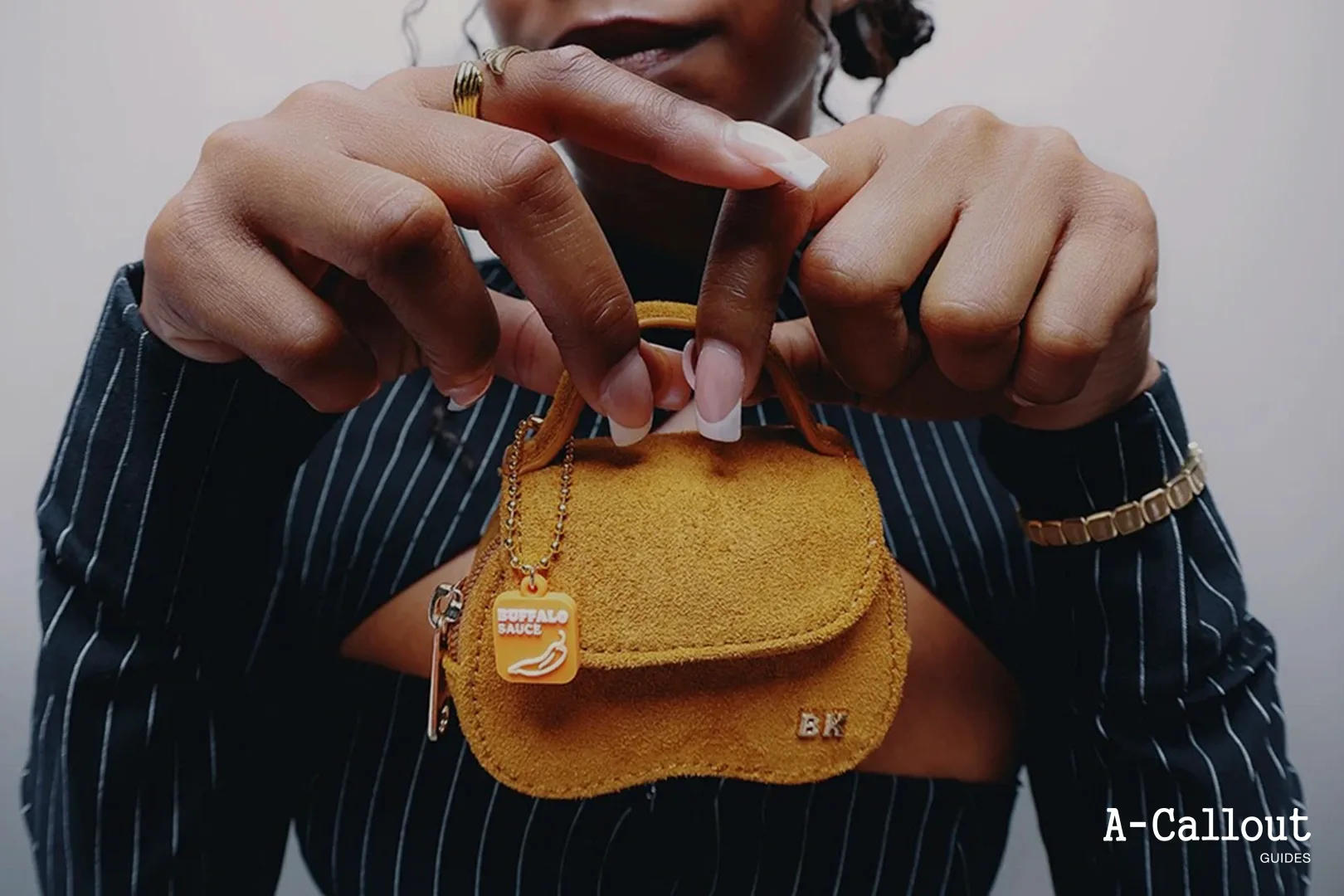
Le Nugguette is a nugget-shaped micro-bag priced at $3.99, the same as a 10-piece chicken nugget order.
Created to mark Burger King's updated nuggets and sauces, it comes with one of four sauce-inspired charms: Special Savory, Honey Mustard, Buffalo, or Sweet and Sour. It also included a code redeemable for a four-piece nugget order. Those details matter because they keep the object tethered to the menu while pushing it well beyond ordinary restaurant merchandise.
As a bag, Le Nugguette is nearly useless.
Its interior holds little more than keys, which is precisely what makes it legible as a fashion object rather than a practical accessory. The scale is intentionally absurd. The Burger King branding is present but not loud. The silhouette does the work: it looks like a nugget, behaves like a micro-bag, and reads as a wearable joke delivered with enough polish to feel deliberate. That tension is the point.
Le Nugguette sits between merch drop, design gag, and collectible accessory.
It borrows the language of high fashion, the tiny bag, the charm system, the limited release, then filters it through the everyday familiarity of fast food. The result is not parody alone. It is a branded object designed to circulate culturally, not just commercially.
The limited release mechanics reinforced that status.
Burger King made 100 bags available per day during the drop window, and customer frustration over quick sellouts only clarified the object's position. A nugget-sized bag that disappears instantly is no longer just a promotional item. It becomes proof that scarcity, humor, and brand recognition can generate demand even when practical value is almost beside the point.
This is why Le Nugguette matters in the wider conversation about fast food and branded design.
Quick service restaurants have long sold branded objects, but this feels more self-aware. The bag does not ask to be mistaken for luxury. Its power comes from being strange, cheap, limited, and highly recognizable at once. The sauce charms turn condiments into fashion details. The nugget shape turns a product into a silhouette. The miniature scale turns inconvenience into personality.
The key is not whether Le Nugguette is worth it as an accessory.
It is worth examining because it captures a larger shift in branded design. Fast food is no longer competing only through taste, price, or menu novelty. It is also competing through objecthood: the ability to make something physical, limited, and culturally readable. Le Nugguette belongs to that new grammar of restaurant branding. It is small enough to be impractical, cheap enough to be funny, and designed enough to feel intentional. Burger King did not just make a nugget bag. It made a palm-sized argument that fast food's next status symbol may be the object that comes after the meal.
October 8, 2026