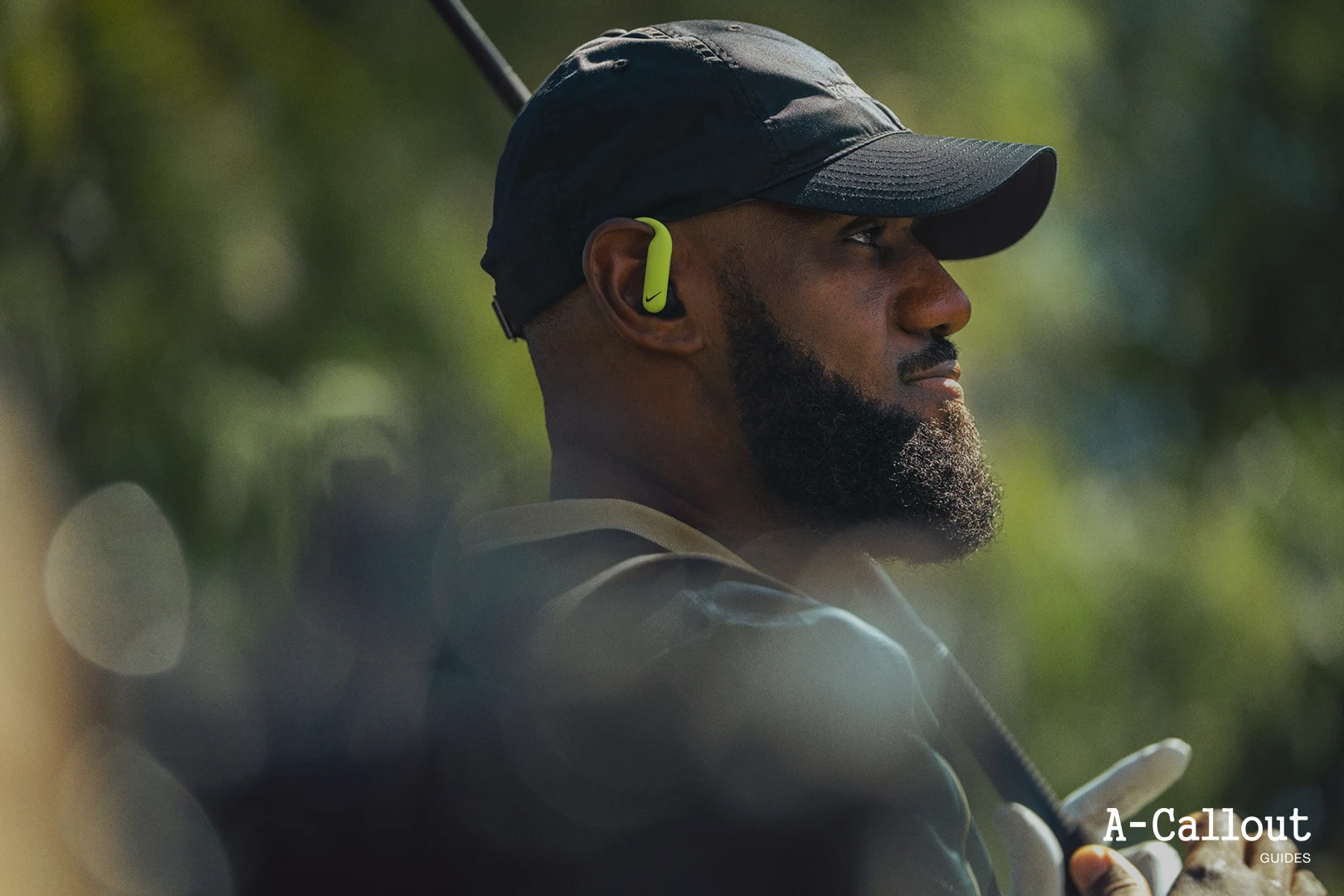
What is the Nike x Beats Powerbeats Pro 2 collaboration really about? On the surface, it appears to be a limited-edition pair of workout earbuds with co-branding and bold color. But the more relevant question is this: are earbuds still accessories, or are they becoming integrated performance tools and signals of athletic identity? Nike and Beats are tightening the relationship between athletic performance, audio culture, and biometric intelligence. In doing so, they reposition sports earbuds from background utility to essential equipment.
The Powerbeats Pro 2 were already designed for performance. Earhooks lock securely during running and strength training. Active Noise Cancelling and Transparency mode let athletes control how much of the outside world enters their focus. Sweat and water resistance make them viable for real training conditions. Up to 45 hours of battery life supports long days blending workouts, recovery, and daily use. But the defining shift is heart-rate monitoring built directly into the earbuds, synced with Nike Run Club and Apple Fitness. This transforms the ear from a passive listening point into a data-collection site. Instead of strapping on extra sensors or glancing at a watch, athletes receive biometric feedback through the same device delivering music and coaching cues. The earbud becomes the most unobtrusive coach in the room.
Design as Symbolic Alignment
Design reinforces this repositioning. The volt splatter charging case communicates raw energy; matte black signals concentration and control. The split branding, with the Beats logo on one earbud and the Nike Swoosh on the other, visually fuses performance technology and sport heritage. For the first time, Beats shares its hardware surface with another brand, marking symbolic alignment rather than a simple logo swap.
Mental Focus as Product Narrative
The campaign context underscores mental focus. The message, Keep your head in the game and everyone else out, frames the earbuds as tools for psychological boundary-setting. Whether on a court, in a gym, or on a golf course, tuning out commentary becomes part of performance discipline.
The Shift From Visible Gear to Invisible Data
This reflects a broader shift in athletic gear. Traditionally, performance equipment was visible and external. In-ear devices are discreet, yet with biometric sensing and app integration, they now hold some of the most intimate performance data. That intimacy changes their status. They mediate focus, measure effort, and connect athletes to digital coaching ecosystems.
Accessory to Biometric Interface
For readers wondering whether this is cosmetic collaboration or meaningful innovation, the answer lies in that integration. The hardware matches the standard Powerbeats Pro 2 platform. What changes is the narrative clarity: Nike and Beats articulate a future in which audio devices operate at the center of training, not at its margins.
The Nike x Beats Powerbeats Pro 2 represent an evolution from accessory to insignia, from sound device to biometric interface. They suggest that the next wave of athletic tools will blend seamlessly into everyday rituals of music, movement, and self-discipline, quietly measuring the body while amplifying focus. This collaboration is less about co-branding and more about convergence. Audio, data, and identity are collapsing into a single object worn on the ear, small, secure, and increasingly central to how athletes train.
April 30, 2026