PlayStation FlexStrike: The Arcade Fight Stick, Reimagined for Modern Living

Sony’s PlayStation FlexStrike reframes the arcade fight stick as a wireless, portable PS5 and PC controller shaped by competitive history and domestic play.

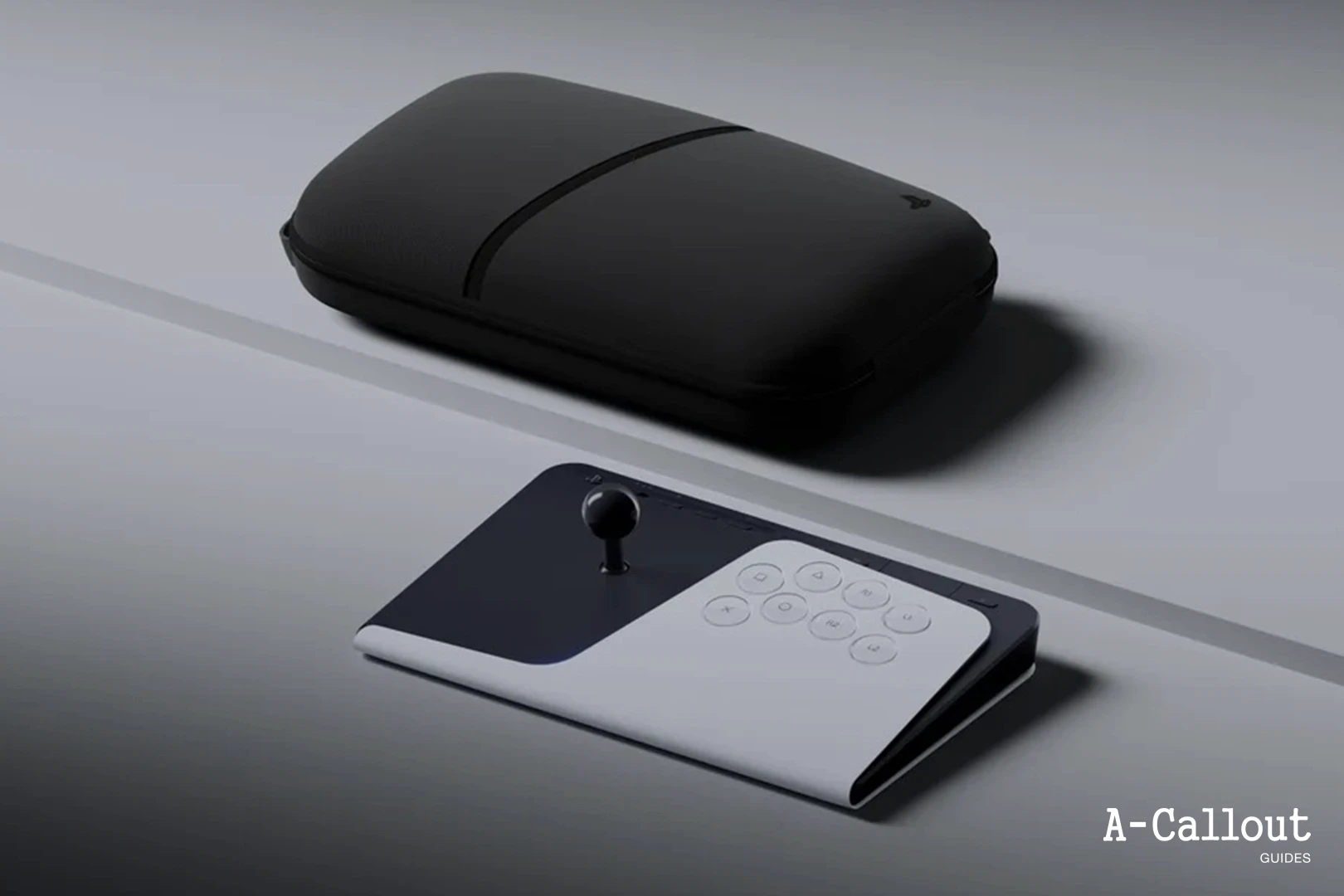
For anyone wondering what the PlayStation FlexStrike is, the simplest answer is that it is Sony's first wireless fight stick for PS5 and PC. But the more interesting question is why a fight stick matters now, in an era when many players learned fighting games on a DualSense rather than in an arcade. FlexStrike is not just a new controller category for PlayStation; it is an attempt to translate the physical culture of arcade fighting games into a portable, domestic object.

That distinction matters. Traditional fight sticks carry a specific history: the cabinet, the arcade floor, the fixed posture of standing shoulder to shoulder in public competition. FlexStrike keeps the recognizable language of that history, the joystick, the eight-button layout, the deliberate hand position, while adapting it to the places games are now played: desks, laps, tournaments, meetups, bedrooms, and carry-on luggage.


Sony has framed FlexStrike around competitive play and portability.

It works wirelessly through PlayStation Link or wired by USB-C, includes a built-in rechargeable battery, and comes with a sling-style carry case. These details make it feel less like a static peripheral and more like personal gaming equipment designed to move with the player. The case is not a minor accessory; it completes the idea that a fight stick can be part of a mobile setup rather than something that lives permanently beside a console.

The design also appears aimed at players curious about fight sticks who have never owned one.

Many arcade-style controllers feel large, heavy, and specialized, with an aura of expertise built into their form. FlexStrike takes a more approachable route: a relatively simple layout, a short digital stick, mechanical switch buttons, and an ergonomic build meant to sit comfortably in the lap. A tilted, textured base and a lock button for preventing accidental system inputs reinforce that this is a focused object, but not an intimidating one.

That balance is central to its cultural meaning.

FlexStrike does not abandon the arcade; it edits it. It preserves the hand choreography of fighting games while removing the bulk, wires, and fixed-location assumptions that once defined the category. The result treats fight culture not only as performance, but as lifestyle: something carried, stored, displayed, and integrated into everyday play.

Its wireless architecture is especially significant because fight sticks have long been associated with reliability, latency concerns, and tournament expectations.

Sony's use of PlayStation Link, along with wired USB-C support, positions the device as a modern competitive accessory rather than a nostalgic novelty. The point is not simply that a fight stick can now be wireless; it is that wireless play has been made part of the object's design identity, alongside portability and ease of use.

FlexStrike also arrives within a broader PlayStation shift beyond the living room television.

Sony's 27-inch Gaming Monitor with DualSense Charging Hook and Pulse Elevate wireless speakers point toward a more modular gaming environment: the desktop setup, the personal corner, the hybrid console-and-PC space. FlexStrike fits naturally into that world. It is not trying to recreate the arcade at full scale; it is reducing the arcade to a portable ritual.

At $199.99 in the United States, FlexStrike is still a considered purchase, particularly for newcomers who may not yet know whether they prefer a fight stick to a gamepad.

That tension is part of its identity. It is approachable in form, but premium in positioning. Sony is not presenting it as essential for every player, but as a more designed way into fighting games, giving new audiences access to a control style once associated with specialized communities.

The enduring interest in FlexStrike is therefore not limited to its release timing or compatibility.

Its importance lies in what it says about gaming hardware now. Controllers are no longer only functional bridges between player and screen. They are objects with posture, memory, and social meaning. FlexStrike takes one of gaming's most historically specific interfaces and recasts it for modern living: wireless, rechargeable, portable, and visually coherent.

Seen that way, the PlayStation FlexStrike is both a fight stick and a design statement.

It compresses the arcade cabinet into something that can sit on a desk, rest on a lap, travel to a tournament, or live inside a sling case. It is a controller shaped by competitive history, but designed for a world where gaming culture is increasingly personal, mobile, and embedded in the objects people choose to keep around them.

June 25, 2026

next up

The Surface RTX Spark Dev Box Makes Local AI Compute a Physical Object

Microsoft’s Surface RTX Spark Dev Box frames local AI compute as a compact, visible developer machine, pairing RTX Spark performance with a deliberately technical design.

June 18, 2026

GUIDES
The EP-136 K.O. Sidekick: A Mixer Designed to Be Worn

The EP-136 K.O. Sidekick is a 16mm-thin, clip-on two-channel mixer and USB interface that reframes mix control as tactile, portable, performance-centered instrument design.

June 11, 2026

GUIDES
TAG Heuer Formula 1 Solargraph 38mm: Luxury Reframed for Everyday Wear

The TAG Heuer Formula 1 Solargraph 38mm reframes its racing heritage through pastel tones, solar-powered practicality, and refined materials suited to everyday, design-conscious wear beyond the track.

June 4, 2026

GUIDES
The Smart Concept #2 Redefines the City Car as a Style Statement

The Smart Concept #2 reframes the compact electric city car as a curated, fashion-informed object, positioning smallness, practicality, and personal identity as equally central to micro-mobility’s future.

May 28, 2026

GUIDES
Nike's Air Lab: How a Brand Installation Became Public Infrastructure

Nike’s Air Lab at Dropcity transforms former rail tunnels into a working laboratory that treats air as material, foregrounds iterative prototyping, and leaves its infrastructure as a permanent civic resource.

May 21, 2026

GUIDES
The Neo Geo AES+ and the Case for Engineered Preservation

The Neo Geo AES+ reconstructs SNK’s original hardware with newly engineered ASICs, cartridge compatibility, and modern HDMI output, framing classic gaming as preservation rather than emulation.

May 14, 2026

GUIDES
km5's Neon Collection: When Audio Equipment Becomes Spatial Design

km5’s Neon Collection reframes audio equipment as spatial design, using transparency, neon accents, and visible circuitry to position CD players and headphones as interior objects rather than hidden electronics.

May 7, 2026

GUIDES
Nike x Beats Powerbeats Pro 2: The Earbud as Athletic Insignia

The Nike x Beats Powerbeats Pro 2 reframes sports earbuds as integrated performance tools, combining biometric monitoring, audio control, and athletic identity within a single in-ear device.

April 30, 2026

GUIDES
The MPC Sample and the Era of Pocket-Sized Professional Samplers

The Akai MPC Sample is a battery-powered, sub‑$500 sampler that pairs classic MPC design cues with modern sequencing, portable recording, and streamlined workflow for mobile music production.

April 23, 2026

GUIDES
Spigen's Classic LS MagSafe Wallet: A Tactile Link to Apple's Design Heritage

Spigen’s Classic LS MagSafe Wallet combines a slim, three-card magnetic holder with a tactile homage to the Macintosh 128K, embedding computing history into an everyday iPhone accessory.

April 16, 2026

GUIDES
The LEGO Air Max 95 Neon Turns a Sneaker Icon Into a Study in Design

The 1,213-piece Nike and LEGO Air Max 95 collaboration reframes the heritage sneaker as a buildable archive, transforming a performance icon into a dissectible display object.

April 9, 2026

GUIDES
How the Nothing Headphone (a) Redefines Affordable Over-Ear Audio

The Nothing Headphone (a) reframes entry-level wireless audio with extended battery life, tactile controls, durable design, and balanced performance that prioritizes everyday reliability over flagship excess.

April 2, 2026

GUIDES
The MacBook Neo Asks: What If Less Were the Point?

An examination of Apple’s $599 MacBook Neo as a deliberately restrained, expressive alternative that reframes laptop value around sufficiency, personality, and environmental consideration rather than maximal performance.

March 26, 2026

GUIDES
Galaxy S26 Ultra: When Discretion Becomes the Premium Feature

The Galaxy S26 Ultra shifts Samsung’s flagship philosophy toward discretion, centering a hardware-integrated Privacy Display and refined design that prioritize attention control over spectacle and overt material expression.

March 19, 2026

GUIDES
Sony WF-1000XM6: When Premium Earbuds Disappear Into Daily Life

Sony’s WF-1000XM6 reframes premium earbuds as adaptive, unobtrusive infrastructure for modern attention, emphasizing natural sound, calibrated noise cancellation, and software-driven control over headline-grabbing specifications.

March 12, 2026

GUIDES
Ferrari Luce: How Craft, Not Screens, Defines the Electric Interior

Ferrari’s first electric model, developed with Jony Ive and LoveFrom, prioritizes tactile controls, material precision, and restrained digital integration over screen-driven spectacle.
March 5, 2026

GUIDES
How CASETiFY and G-DRAGON Turned the Phone Case Into Fashion Infrastructure
CASETiFY’s 15th anniversary CHROMATIC collaboration with G-DRAGON reframes the phone case as fashion infrastructure, emphasizing material presence, modular design, and artist-led direction over surface graphics or branding.

February 26, 2026

GUIDES
Sony PS-LX3BT and PS-LX5BT: Vinyl Without the Ritual

Sony’s PS-LX3BT and PS-LX5BT reposition the turntable as a fully automatic, Bluetooth-enabled audio source designed to integrate seamlessly with contemporary wireless listening ecosystems.

February 19, 2026

GUIDES
The Anti-Gadget Approach: Why VITURE's The Beast Bets on Invisible XR

VITURE’s The Beast reframes XR glasses as a discreet, spatial workstation, favoring comfort, daylight usability, and anchored virtual screens that support ordinary tasks without demanding attention.

February 12, 2026

GUIDES
Audi's R26: Formula 1 as Brand Infrastructure

Audi’s R26 presents Formula 1 as a brand operating system, using integrated design, in-house engineering, and partnerships to prototype identity beyond immediate racing results.

February 5, 2026

GUIDES
Samsung Music Studio 5 and 7: When Speakers Become Furniture

Samsung’s Music Studio 5 and 7 present speakers as restrained interior objects, combining controlled, AI-tuned sound, spatial projection, and seamless connectivity to integrate audio quietly into living spaces.

January 29, 2026

GUIDES
Murakami's CASETiFY Collection Turns Tech Accessories Into Wearable Art Archives

The Murakami x CASETiFY Flowers Bloom collection reframes tech accessories as cultural containers, using setsugetsuka, modular systems, and participatory scarcity to position ownership as ongoing engagement.

January 23, 2026

GUIDES
MobED and the Quiet Rise of Platform Robotics

Hyundai’s MobED exemplifies a shift toward autonomous systems designed for integration, emphasizing mechanical stability, embedded sensing, and modular adaptability over interaction, personality, or spectacle.

January 15, 2026

GUIDES