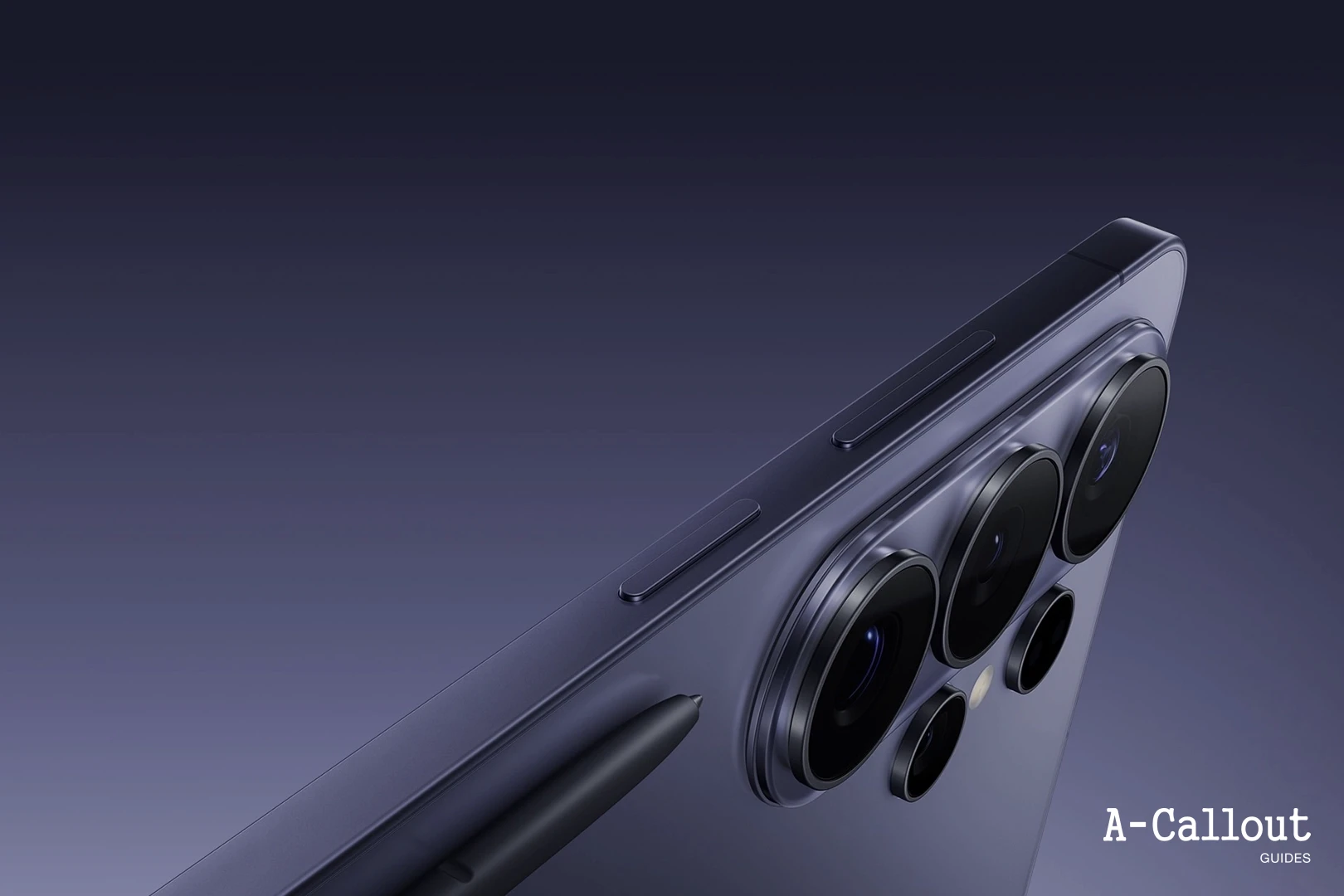
Is the Samsung Galaxy S26 Ultra a necessary upgrade, or does it signal something quieter - a shift in what a flagship smartphone is meant to do? For many, the question begins with comparison. The Galaxy S24 Ultra remains powerful, well-built, and supported with long-term software updates. Its titanium frame, boxy silhouette, Bluetooth-enabled S Pen, and competitive camera system make it far from obsolete. On paper, that alone makes the case for skipping an upgrade.
But the S26 Ultra is not primarily about incremental performance gains. Its significance lies elsewhere. At the center of this shift is the hardware-integrated Privacy Display. Unlike software-based viewing-angle filters, this system works at the display level, limiting what bystanders can see. It allows users to control screen visibility in public spaces - on trains, in offices, in cafes - without altering brightness or usability for themselves.
The Shift from Spectacle to Control
That feature reframes the purpose of a flagship phone. For years, smartphone design has favored spectacle: brighter screens, louder aesthetics, sharper edges, more conspicuous materials. The S24 Ultra embodied that philosophy. Its squared-off design traced the Galaxy Note lineage, deliberately bold and purpose-built for power users. It looked expensive and felt assertive.
The S26 Ultra softens that stance. Its refined silhouette blends more easily into Samsung's broader lineup. Armor Aluminum replaces titanium. The S Pen relinquishes Bluetooth functionality, returning to a passive writing instrument. These changes can be read as cost-saving, but they can also be understood as decluttering.
Privacy as a Flagship Principle
The Privacy Display completes that pivot. Instead of projecting status outward, the S26 Ultra focuses on regulating who gains access to your screen. In an era of open offices, constant messaging, and shared commutes, privacy has become less about secrecy and more about attention management.
This is why the device matters beyond specifications. The 5,000mAh battery remains. Performance improvements are evolutionary rather than dramatic. The camera hardware continues a familiar trajectory. The S26 Ultra does not attempt to overwhelm with novelty - it introduces one defining capability and builds a quieter hardware story around it.
Security and Positioning
Security updates reinforce this positioning. Being placed in Samsung's highest monthly update tier from launch underscores that the device is framed as a protection-first flagship. Privacy, in this context, is not only optical - it is infrastructural.
Yet this shift will not resonate equally with everyone. For users who work primarily from home, rarely share physical space with strangers, or value titanium's tactile presence and a Bluetooth S Pen, the S24 Ultra may still feel more expressive. Its materials feel overtly premium. Its camera system and processor remain powerful enough to avoid feeling compromised.
A Broader Cultural Recalibration
The S26 Ultra asks a different question: do you want your flagship to command the room, or to disappear into it? That distinction reflects a broader change in smartphone culture. We are no longer in the early era of maximalist innovation, where each generation needed to look unmistakably new. Maturity in design often manifests as restraint. The decision to prioritize screen privacy over stylistic sharpness signals that discretion itself has become a premium value.
For commuters and professionals in shared environments, the Privacy Display is not a luxury - it is practical agency. It transforms the smartphone from a broadcast surface into a controlled interface. Privacy becomes social currency: the ability to interact digitally without surrendering awareness to bystanders.
Refinement or Dilution?
For others, the S26 Ultra may feel understated to a fault. Without the Privacy Display as a clear need, its softer design risks reading as dilution rather than refinement.
The lasting insight: the Galaxy S26 Ultra is not defined by what it adds in bulk, but by what it subtracts in spectacle. It represents a flagship philosophy less concerned with dominating attention and more invested in directing it. If the S24 Ultra stands as the apex of exhibitionist design - angular, metallic, and unapologetically visible - the S26 Ultra marks a pivot toward discretion. Not concealment for its own sake, but authorship over visibility. In a market where yearly upgrades often blur together, that philosophical recalibration may be the most meaningful change of all.
March 19, 2026
Related Article