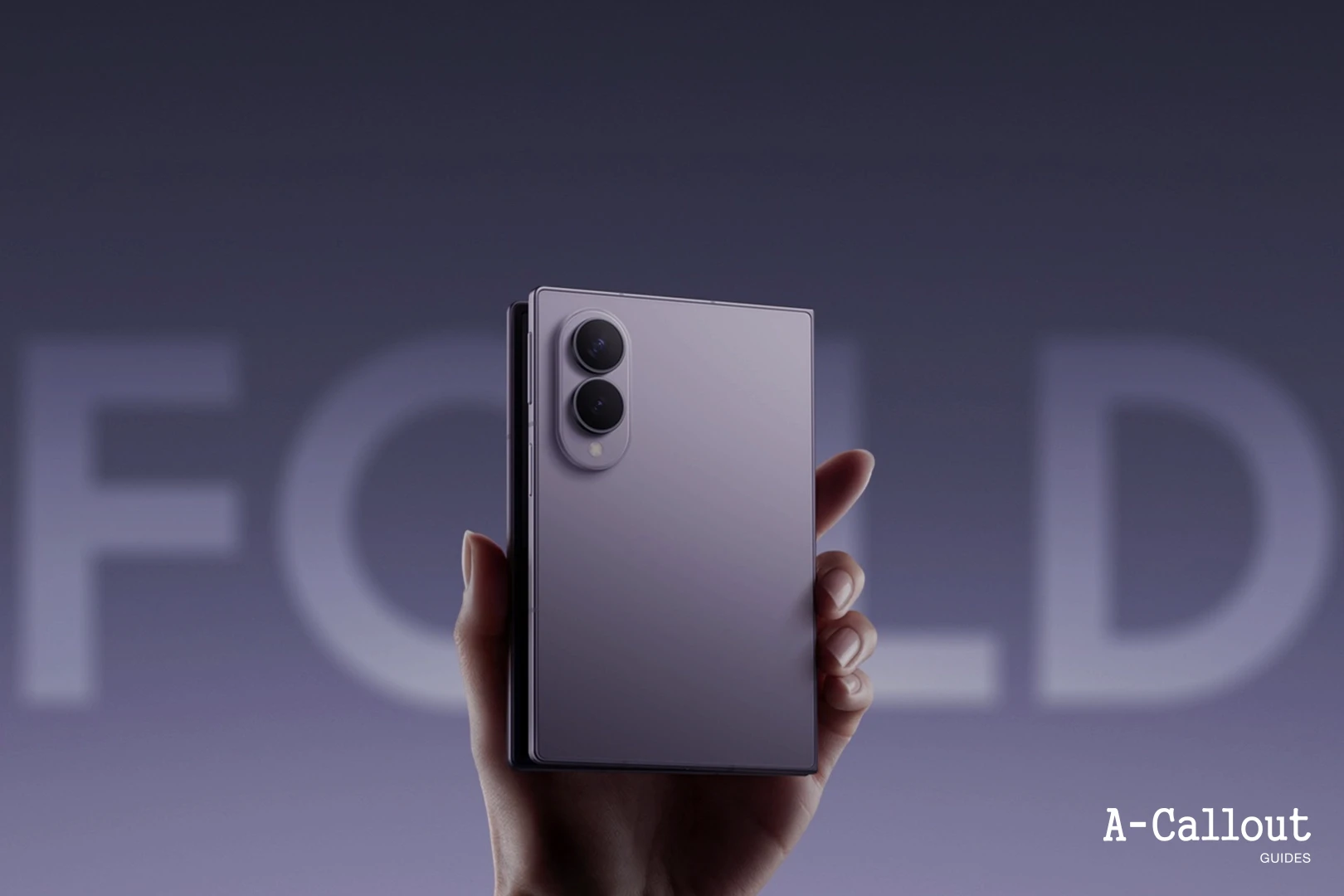
The most useful question about the Samsung Galaxy Z Fold8 is not whether it is faster or brighter than its predecessor. It is simpler: what is the Fold8 actually trying to change about the way a phone is used?
The answer sits in its form. The Galaxy Z Fold8 presents the foldable phone as a mature everyday object rather than a novelty, one that moves between quick cover-screen use and a larger, tablet-like main display without feeling like two separate products. Its wider stance, lighter body, 4:3 folding screen, refined hinge, and direct Galaxy AI integration all point toward the same idea: a phone that adapts physically to the moment.
That matters because foldables have historically been discussed as technical achievements first.
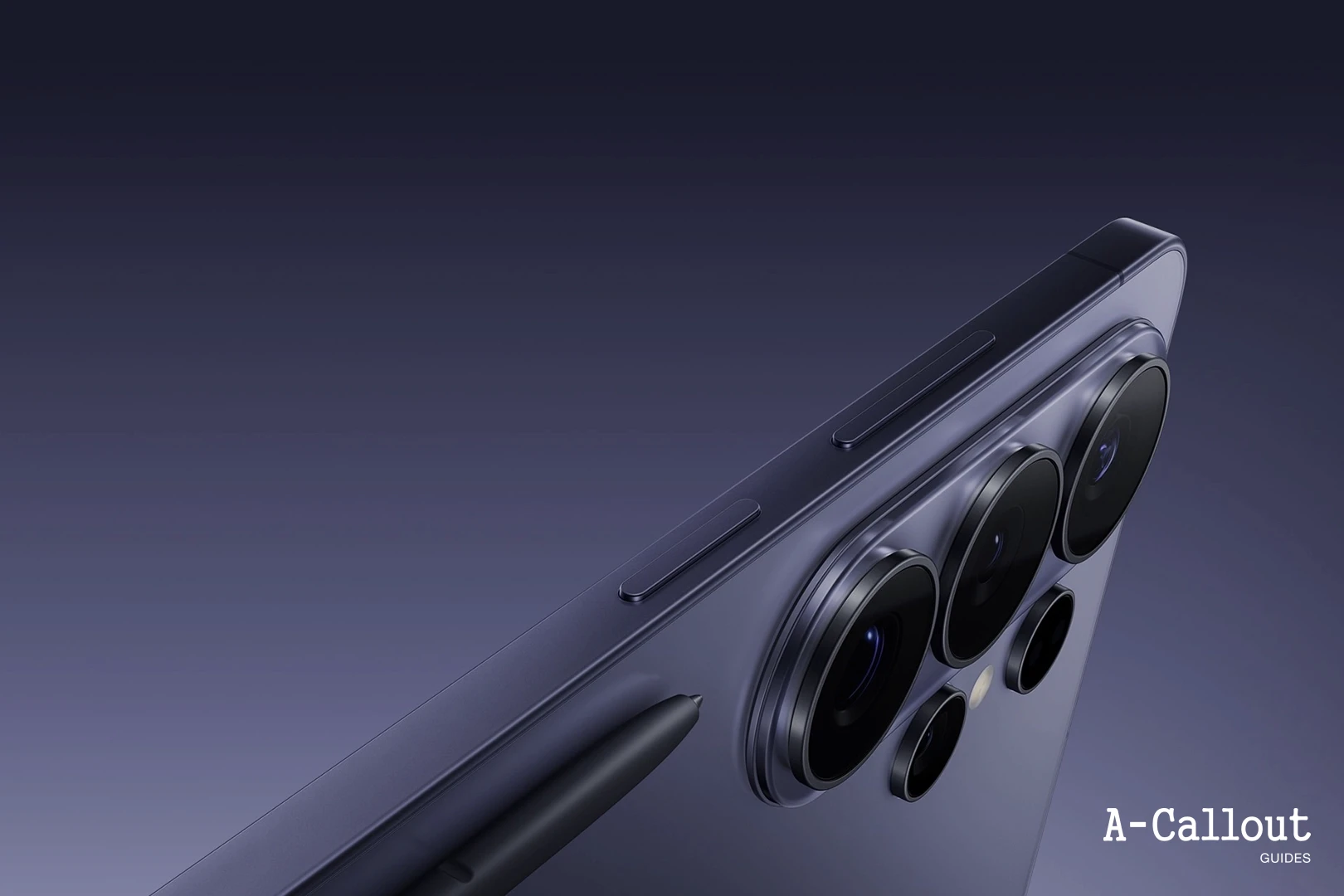
The hinge, the crease, the durability, the battery. Those details still matter, but the Fold8 signals a shift in emphasis. Samsung's design language, called Emotive Geometry, frames the phone as something architectural and expressive rather than compact engineering. It is designed to feel deliberate when closed, held, opened, and used.
The 4:3 main display is central to that argument.
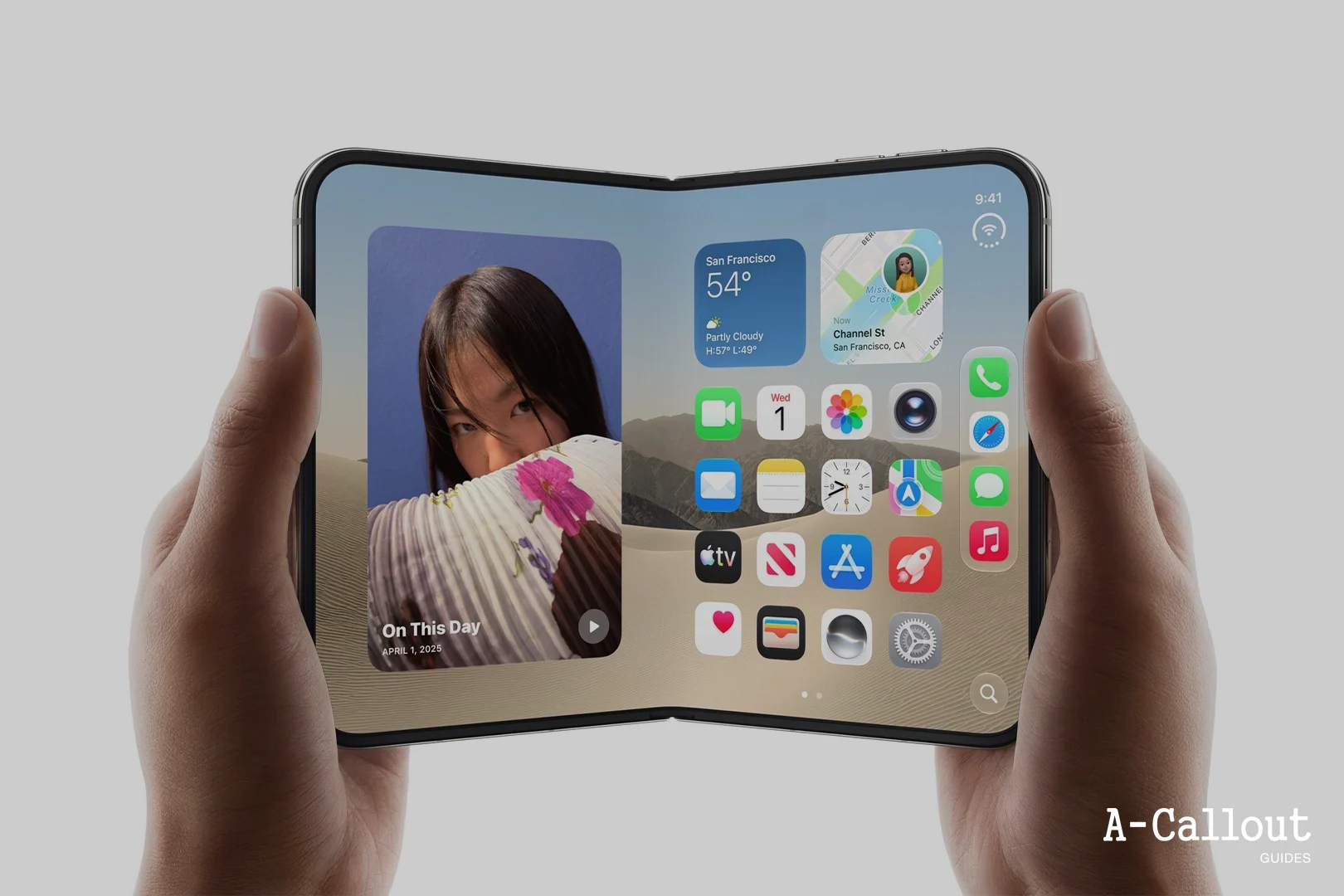
It gives the Fold8 a more balanced unfolded shape for reading, watching, browsing, gaming, and multitasking. Rather than simply making a normal phone bigger, the foldable display creates a different kind of canvas, closer to a small tablet but still pocketable when folded. The cover screen handles shorter interactions; the inner screen supports deeper attention.
This is where the Fold8 begins to feel less like a phone with an extra screen and more like a device with two distinct postures.
Closed, it stays immediate and familiar. Open, it becomes immersive and spatial. The hinge is not just a mechanical solution; it is part of the product's daily ritual. Unfolding becomes a transition between modes of attention.
Galaxy AI becomes more meaningful in this context.
On a traditional phone, AI can feel like another software layer on an already crowded interface. On the Fold8, Samsung gives it a more physical presence through the side key, larger working area, and foldable multitasking environment. Features like Now Brief, Now Nudge, Gemini Intelligence, and connected Galaxy AI experiences are built around fewer steps, more context, and more personal assistance. The hardware gives AI a clearer place to live.
The Fold8 sits within a broader Z series that includes the productivity-focused Fold8 Ultra and the compact Flip8.
That context defines its role. It is not the maximum-spec model, nor the most playful. It occupies the middle ground where Samsung argues the foldable format has become useful, balanced, and emotionally legible for everyday life.
Its specifications support that argument without defining it.
The Fold8 is Samsung's lightest Galaxy Z Fold yet at 201 g, uses a 10:16 cover screen, carries a 4,800 mAh battery, and runs on the Snapdragon 8 Elite Gen 5 Mobile Platform for Galaxy. Its display reaches up to 3,000 nits with low reflection, while the Flex Titanium display structure makes the device thinner, more durable, less creased, and better to unfold. These are the practical conditions that allow the design idea to work.
Competition sharpens the Fold8's proposition further.
Other foldables are pressing Samsung on battery, charging, thinness, cameras, and connectivity. That pressure is healthy, but it also clarifies what Samsung is arguing. The Fold8 is not about winning every number. It is about making the foldable phone feel resolved enough to serve as a primary personal device.
That is the larger shift the Galaxy Z Fold8 represents.
Smartphones have long compressed work, entertainment, photography, communication, and personal organization into one fixed rectangle. A mature foldable challenges that pattern. It lets the object change shape with the task, and in doing so changes the relationship between hand, screen, interface, and attention.
The Fold8's significance is therefore not just its place in Samsung's lineup.
It is a signal that personal technology is becoming more physical again. The phone is no longer only a portal to software; it is a designed object whose proportions, hinge, grip, materials, and gestures shape how digital life feels. The Fold8 is less a spec sheet dressed in hardware than a proposal for what a more adaptive, expressive, and intimate phone can be.
August 13, 2026