The question around the Razer Naga V3 Pro is not simply whether it is a good MMO mouse. It is whether one gaming mouse can realistically replace the small collection of genre-specific peripherals many PC players accumulate over time. MMO players want a dense thumb grid for skills and macros. FPS players prefer fewer buttons and a cleaner grip. The Naga V3 Pro addresses that conflict with a physical design choice rather than a software workaround.
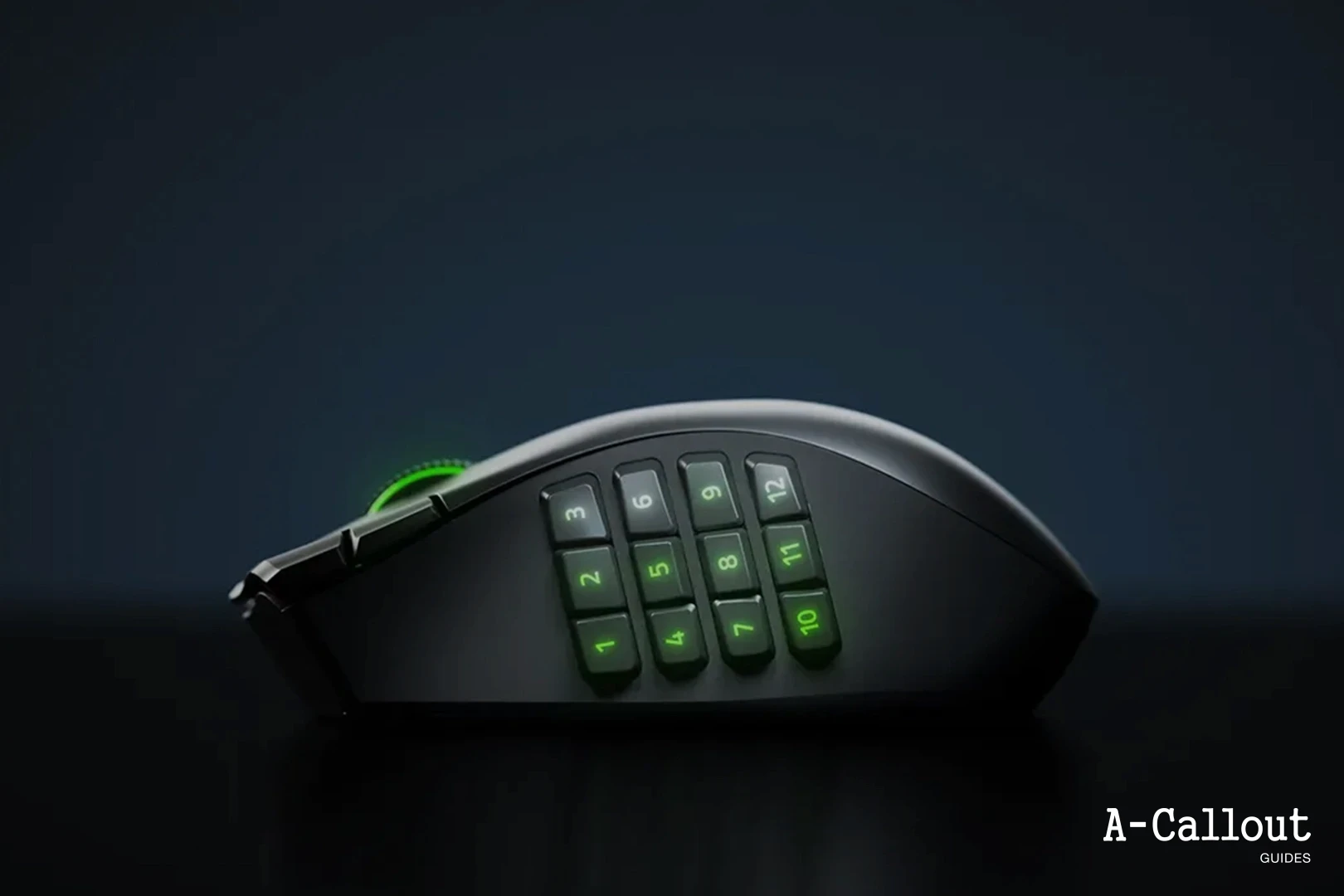
Its defining feature is a set of magnetic side plates that turn the same wireless mouse into three different control layouts. One plate offers a 12-button MMO grid, another provides a six-button arrangement suited to MOBAs or hybrid setups, and a simpler two-button plate makes the mouse feel closer to a conventional gaming mouse for shooters or everyday use. The point is not that every player needs 23 programmable buttons at all times. The point is that the button count can match the task.
That is what makes the Naga V3 Pro feel less like a single-use peripheral and more like modular hardware.
Traditional MMO mice solve one problem well but become awkward outside that genre. A stripped-down FPS mouse cannot offer the same access to hotbars, modifiers, and macros. Razer's design reframes versatility as physical configuration: swap the side panel, and the mouse's role changes with it.
This matters because gaming mice are often marketed through excess.
The Naga V3 Pro is premium, but its strongest argument is consolidation. At $179.99, the price makes more sense if it replaces the need to own separate mice for MMOs, shooters, and general use. Its value depends less on maximum button count and more on whether a player actually moves between different kinds of games.
The 12-button plate remains the core of the Naga identity.
For MMOs, it puts rotations, mounts, targeting commands, and utility actions under the thumb, reducing reliance on keyboard reaches during dense encounters. It also carries the steepest learning curve. A full thumb grid requires muscle memory, and players used to handling most abilities with the left hand may need time before the layout feels natural.
The six-button plate is arguably the most flexible middle ground.
It gives players enough inputs for abilities, pings, items, or push-to-talk without demanding the precision of a full numpad-style grid. For games that sit between MMO complexity and FPS minimalism, this plate is the clearest expression of the Naga V3 Pro's broader logic: not every game needs maximum input density, but many benefit from more than two thumb buttons.
The two-button plate is equally important because it prevents the mouse from being trapped by its own specialization.
With it installed, the Naga V3 Pro becomes usable for shooters, browsing, and work. It will not become an ultralight esports mouse, and players focused exclusively on competitive FPS may still prefer something lighter. But the two-button panel gives the Naga a credible everyday mode, which is central to its consolidation argument.
Razer supports the modular shell with optical switches, a high-end sensor, wireless connectivity, and a HyperScroll tilt wheel with multiple scroll modes.
These details matter because flexibility can feel like a compromise if the basics are weak. Here, the swappable plates sit on top of a performance platform built to feel precise and responsive across different uses.
The scroll wheel is a quieter but meaningful part of the design.
Its tactile, free-spinning, and tilt functions work well not only in games but in inventories, spreadsheets, and daily desktop work. The extra ring-finger button can serve as a useful modifier for hotbars or macros, while its physical lock addresses a basic truth of dense controls: a button is only helpful if it does not create accidental inputs.
The Naga V3 Pro also depends on software more than a simpler mouse would.
Remapping, profiles, and layout-specific configurations are a large part of what make the hardware worthwhile. Someone unwilling to customize controls will not get full value from it. Someone who already thinks in profiles, bindings, and macros is much more likely to see the appeal.
Its limitations follow from the same ambition.
It is a relatively chunky mouse, and even with different plates, it prioritizes control density over extreme lightness. The 12-button grid benefits from strong thumb indexing, since dense layouts are easier to trust when the hand can orient itself by touch. And for owners of the previous Naga V2 Pro who are already satisfied, this is a refinement rather than an essential upgrade.
The larger significance of the Razer Naga V3 Pro is that it treats adaptability as a design problem, not just a feature list.
It acknowledges that the best mouse for a raid is not the best mouse for a shooter, and that many players no longer fit neatly into one genre. For them, the Naga V3 Pro's strongest idea is straightforward: one well-equipped mouse can change shape instead of forcing the player to double up.
September 3, 2026
Related Article