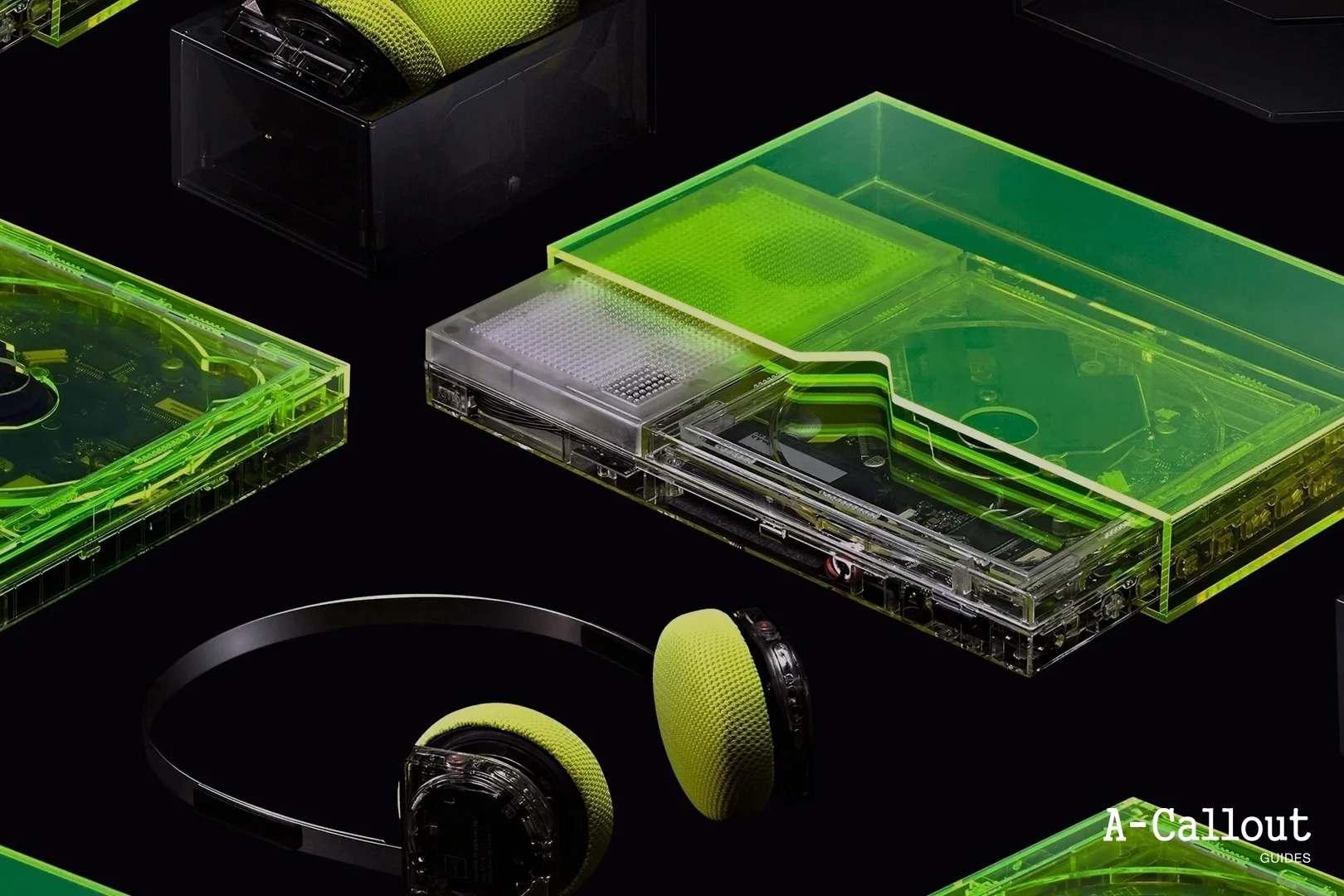
The central question around the Xbox 25th Anniversary Collection is not simply what products are included. It is why Microsoft would return to the translucent green identity of the original Xbox now, and what that choice says about how Xbox sees play in 2026. This collection matters because it treats brand history as a usable design system rather than a one-off nostalgic skin.
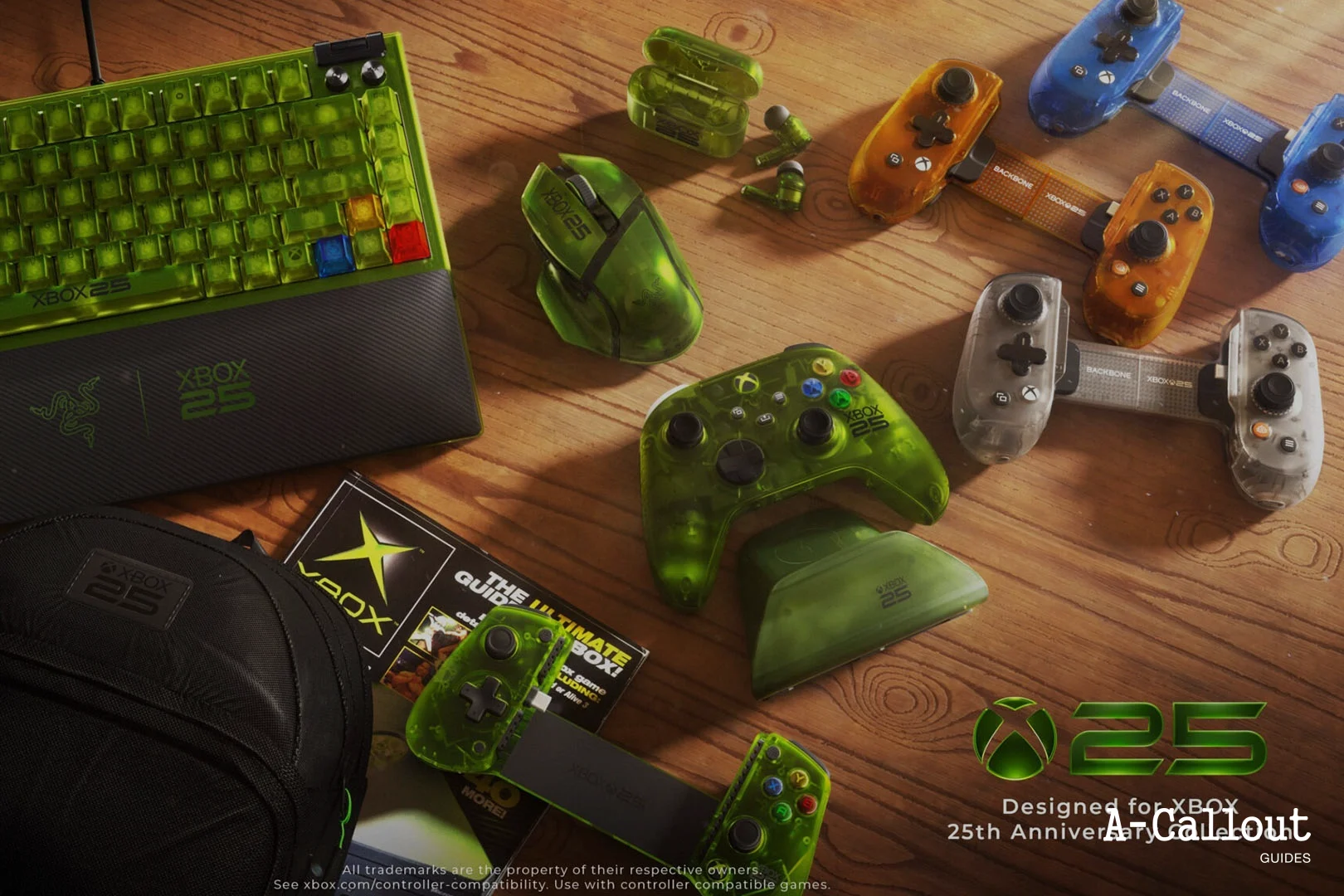
The Designed for Xbox 25th Anniversary Collection brings the original console's translucent green look into a wider ecosystem of accessories made by partners including Razer, 8BitDo, Backbone, GameSir, and PowerA. The result is not a replica of the first Xbox, nor a single commemorative controller. It is a group of contemporary products covering desks, mobile gaming, controller charging, handheld carry, and cloud-connected play.
That distinction matters.
Anniversary products often rely on memory alone: a familiar color, a logo, a generational reference. Here, translucent green becomes more than a callback. It gives the collection a shared visual identity while allowing each object to answer a practical need in today's Xbox environment. The color connects the products emotionally, but their usefulness is what keeps the idea from becoming pure memorabilia.
The Razer pieces show how the collection extends Xbox heritage into the PC desk setup.
The Basilisk V3 Pro 35K mouse, BlackWidow V4 75% keyboard, and Hammerhead V3 X HyperSpeed earbuds translate the anniversary theme into tools for Windows and multi-platform play. The keyboard's dedicated Xbox key is not just decoration; it links the object to how players access gaming features on PC.
The mobile controllers make the same point from another direction.
Streaming and mobile play have made the phone an important Xbox screen, but touchscreen controls remain an awkward compromise for many games. The GameSir X5 Lite and Backbone Pro both address that problem by giving phones physical controls, while aiming at different kinds of players.
GameSir's version is the more focused mobile accessory.
Its translucent green shell echoes Xbox history, but its relevance comes from a telescoping body, support for compatible iOS and Android devices, pass-through charging, Hall Effect sticks and triggers, and a movable USB-C connector. It frames the anniversary treatment around a simple contemporary need: making phone-based Xbox play feel less improvised.
Backbone's controller takes a broader view.
The Backbone Pro can attach to a compatible USB-C phone for wired play, but Bluetooth support extends it to PCs, tablets, laptops, and smart TVs. That makes it less about the phone as a fixed destination and more about gaming that moves between screens. Its blind-box anniversary colors, including Crystal Clear, Iconic Blue, and Bold Orange, lean into collectibility, but the product's larger argument is flexibility.
The 8BitDo Ultimate Charging Dock for Xbox Controllers brings the collection back to the console object in a quieter way.
A charging dock is not the centerpiece of a gaming setup, yet it is part of the daily ritual of keeping controllers ready. Giving it the transparent green treatment suggests a design language that can live in the background, not only on headline hardware.
PowerA's Xbox Sling Bag pushes the anniversary identity into portability.
Designed to fit ROG Xbox Ally and ROG Xbox Ally X devices, with compartments for a headset, controller, phone, and accessories, it recognizes that modern Xbox play includes handhelds and travel. The bag is not nostalgic in function, even if it belongs visually to the same anniversary family.
Seen together, the collection reframes the original Xbox aesthetic as an ecosystem strategy.
Translucent green is the recognizable thread, but the objects themselves point to a changed gaming culture: desktop setups, mobile controllers, wireless earbuds, controller docks, and handheld carry all sitting alongside the console.
That is what makes the 25th Anniversary Collection more interesting than a conventional commemorative release.
It does not ask players only to remember 2001. It asks whether an old visual code can still organize useful objects in the present. The collection's strongest idea is not nostalgia, but continuity: memory turned into hardware people can actually use.
September 10, 2026
Related Article