What does it mean for audio equipment to function as part of a room rather than simply inside it? For many people searching for km5's Neon Collection, the question isn't about specifications or signal paths. It's about why a transparent CD player or neon-accented headphones feel different from conventional electronics - and why that difference matters. With the Neon Collection, km5 positions sound equipment closer to spatial design than traditional hi-fi culture.
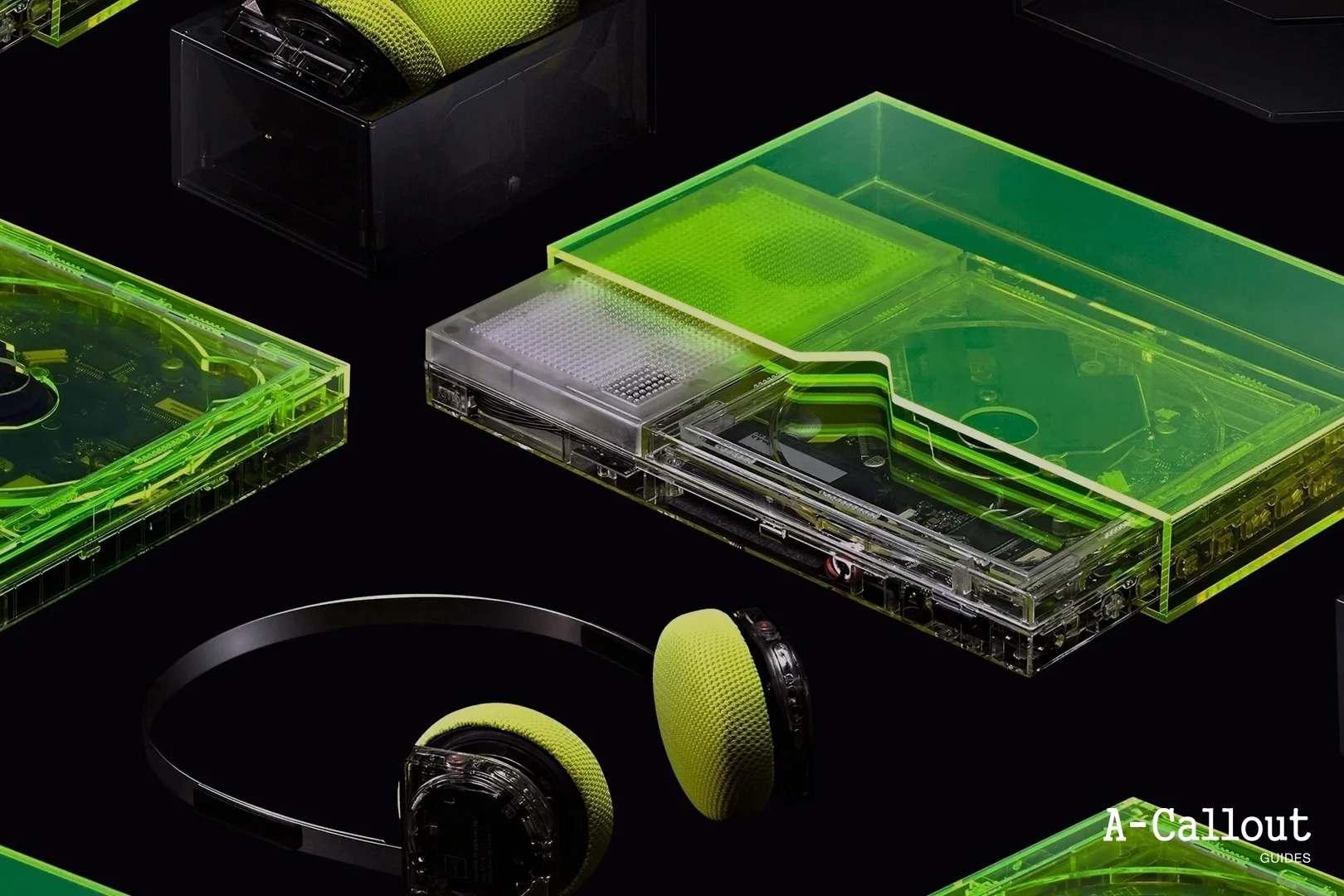
The Cp1 and Cp2 CD players and the ultra-light Hp1 headphones are not defined primarily by output metrics. Instead, they foreground material, color, and presence. Transparent housings reveal circuitry. Neon Yellow edges appear to glow. Lime-toned ear cushions punctuate otherwise skeletal forms. The technical interior becomes a visible layer of the object's identity.
Audio Hardware as Interior Architecture
This approach reframes audio hardware as interior architecture. The Cp1's frame-like structure allows album artwork to remain visible during playback, treating the CD jacket as a fixed visual element. The Cp2 extends this with built-in speakers and wall-mounting capability, reinforcing the notion that music can occupy vertical space like art or signage.
Rather than stacking boxes on a console, km5 invites users to consider how sound is placed - physically and atmospherically.
Transparency as Aesthetic Language
Transparency is central. Clear materials expose internal structure, making circuitry part of the aesthetic language. In most electronics, internal components are purely functional and visually concealed. Here, they serve as texture and pattern.
The Clear models highlight mechanical logic, while Neon Yellow variants add high-visibility edges that read as both futuristic and playful. This contrast defines the collection's visual tension.
Shifting the Hierarchy of Values
This is not a reinvention of functionality. The core concepts - CD playback, Bluetooth connectivity, rechargeable portability - remain straightforward. What changes is the hierarchy of values. Instead of announcing marginal technical upgrades, km5 refines how existing devices look, sit, and glow within a space.
Accessories such as acrylic cases and charging stands reinforce display as part of use. Even at rest, the objects contribute to the room.
Wearable, Accessory, Object
The Hp1 headphones underscore this shift. Marketed for overwhelming lightness, they are visually minimal yet conspicuous in their transparency. The exposed housing and lime ear pads align as easily with street fashion as with a desk setup.
They blur categories: part wearable device, part stylistic accessory, part sculptural form.
Tech-Mode Culture
Calling this tech-mode culture is apt. It fuses the electric side of music - its glow, rhythm, and charge - with minimalist design logic. White and black give way to clear shells and neon accents, transforming audio gear into artifacts with fashion and interior presence.
Music becomes a continuous atmospheric layer rather than a discrete activity.
Objects for Living With
The key insight: the Neon Collection exemplifies a broader shift in how audio products are conceived. They are no longer just tools for listening but objects for living with. Performance still matters, but visual integration and spatial impact are equally important.
Sound is staged, framed, and illuminated. km5's Neon Collection does not ask you to hide your equipment. It assumes the device itself belongs in view - that circuitry can be beautiful, that neon can be structural, and that a playlist can shape a room as clearly as furniture does.
May 7, 2026