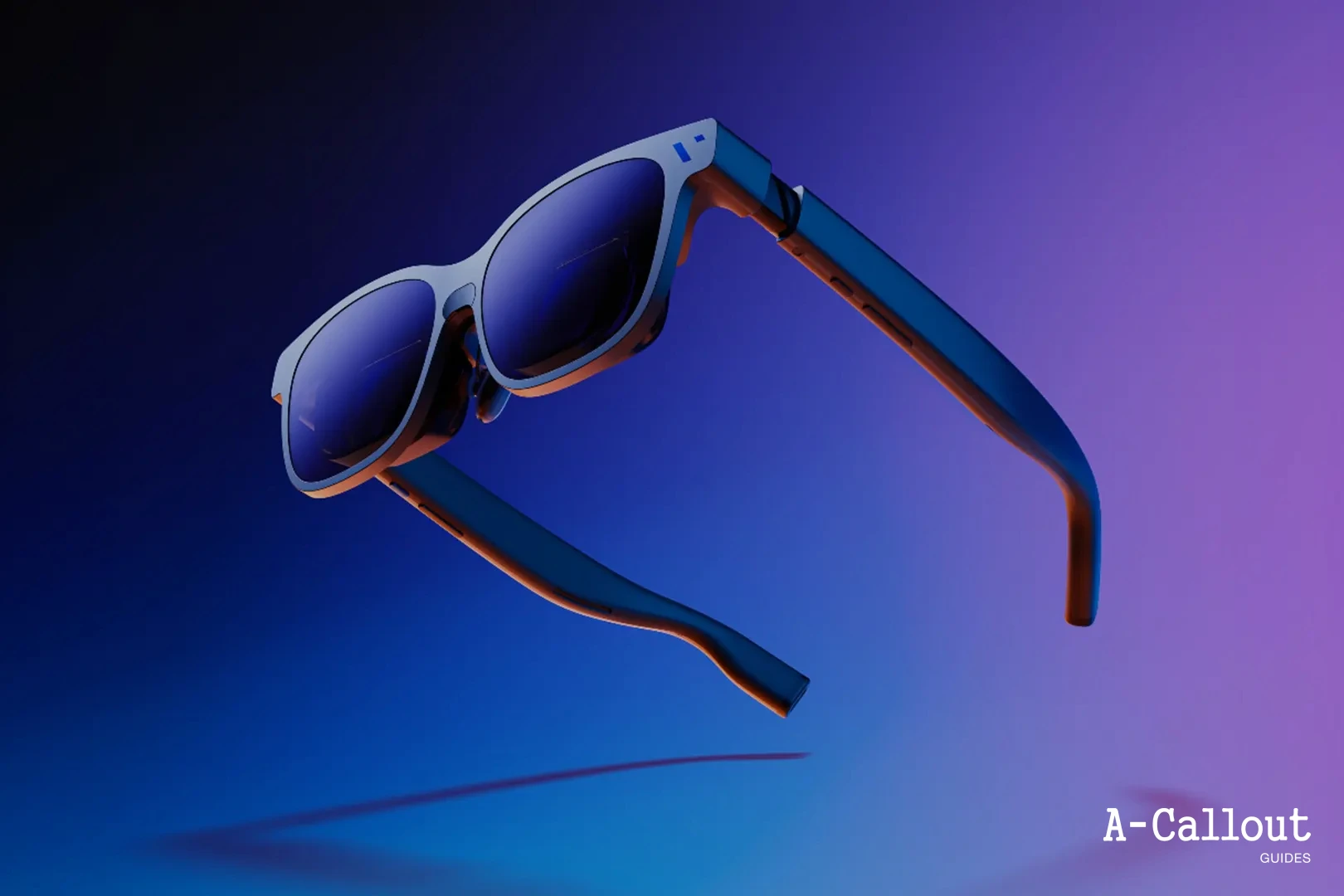
What should an XR display actually do in daily life? For years, the category has chased spectacle—brighter overlays, louder futures, hardware that announces itself before earning its place. The more pressing question is simpler: can a virtual screen feel present without feeling intrusive? VITURE's The Beast answers by repositioning XR glasses not as a gadget to manage, but as an environment that recedes once it's working.
The Beast is built around a deliberate inversion of smart-glasses logic. Instead of centering attention on visible tech or novel gestures, it prioritizes disappearance. The magnesium-aluminum chassis and Sony micro-OLED panels deliver a large, stable 174-inch virtual display without asking wearers to adjust their behavior. The result is expansive but not theatrical—cinematic yet oddly neutral, like a well-calibrated room rather than a device demanding admiration.
This attitude shapes every design decision.
Earlier XR glasses often read as prototypes, signaling ambition through exposed complexity. The Beast avoids that trap by presenting itself as resolved. Daylight usability is baseline rather than bonus. Tintable lenses extend outdoor use without turning the glasses into a statement piece. Comfort matters for full sessions, allowing wear to extend beyond novelty into habit. The design doesn't shout future—it makes a case for continuity.
Where The Beast becomes more than a private theater is in how it handles space.
Features like VisionPair tracking and Spatial Anchor introduce interface logic that breaks from flat operating systems without dramatizing the shift. Windows exist in physical space, behaving more like placed objects than browser tabs. UltraWide mode and immersive 3D views extend this idea as spatial clarity, not spectacle. The interface aims to feel inevitable.
That inevitability is key.
The Beast treats spatial computing as a productivity environment by default, not an aspirational use case. Split-screen app views and anchored displays turn the glasses into a wearable workstation. The value isn't multitasking for its own sake, but reducing friction between intent and visibility. You look, and the workspace is already there.
This reframing doesn't position XR as an escape hatch.
There's no promise of replacement worlds or persistent avatars. Fresh off collaborations and its CES appearance, VITURE's message remains subdued: XR works best when it supports ordinary activities without demanding new rituals. The glasses don't pull users from their surroundings; they quietly layer information where it's useful, then fade from awareness.
This is the anti-gadget stance at The Beast's heart.
Its most ambitious move isn't technical bravado, but restraint. By refusing to foreground specs or theatrical interaction, it aligns XR with familiar design values—comfort, discretion, and coherence. The glasses succeed not when noticed, but when forgotten.
For readers wondering where XR fits next, The Beast offers a clear proposition.
The future of screens may not be larger, louder, or more social. It may be personal, spatial, and intentionally invisible—a screen only you can see, and scarcely have to think about.
February 12, 2026