
Forte3D

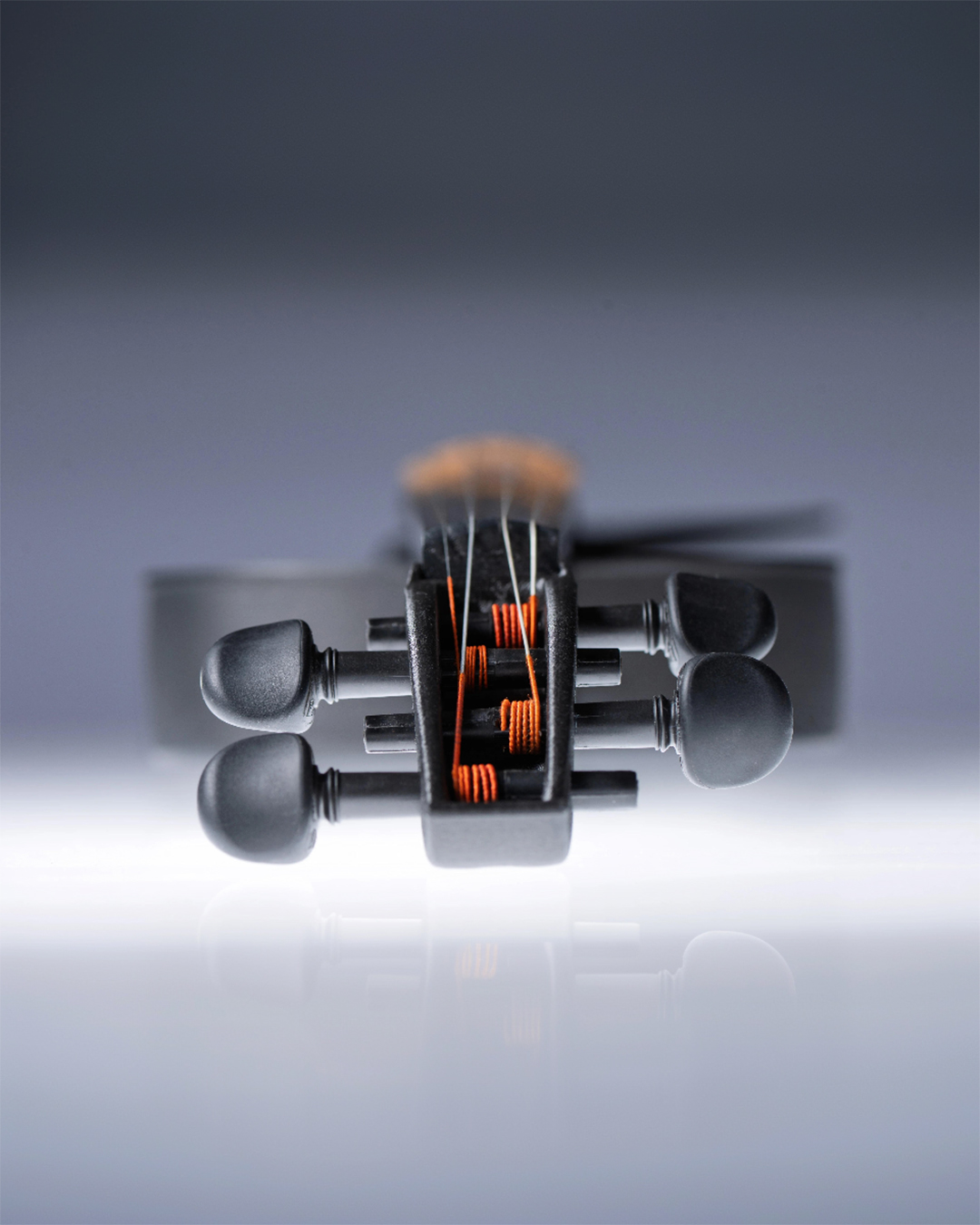
Forte3D is not interested in replicating centuries-old string instruments. Instead, the brand is asking why musicians still tolerate their inherent fragility. The violin and cello feature flat, concave carbon fiber panels in place of traditional carved spruce and maple, with 3D-printed polymer ribs and necks forming the structural core. Select wooden components remain, preserving the tonal character players expect. The outcome is less heirloom, more high-performance tool: impervious to humidity shifts, unbothered by temperature swings, and easy to clean with household basics. Subtle but intentional details reveal a deeper design intelligence. Adjustable string height comes standard, dialed in with a simple tool. Printed guides secure the bridge position with precision. Wolf-tone dampeners, smooth-turning pegs, and a rear sound port on the violin cater to musicians whose lives extend beyond the concert hall, from outdoor gigs to cross-country teaching circuits. What Forte3D proposes is a new visual and functional language for acoustic instruments. Luxury here is not defined by delicacy but by access and endurance. Through additive manufacturing, the brand brings luthier-grade refinement to a wider audience, building the future of sound one carbon layer at a time.