Fauna Robotics

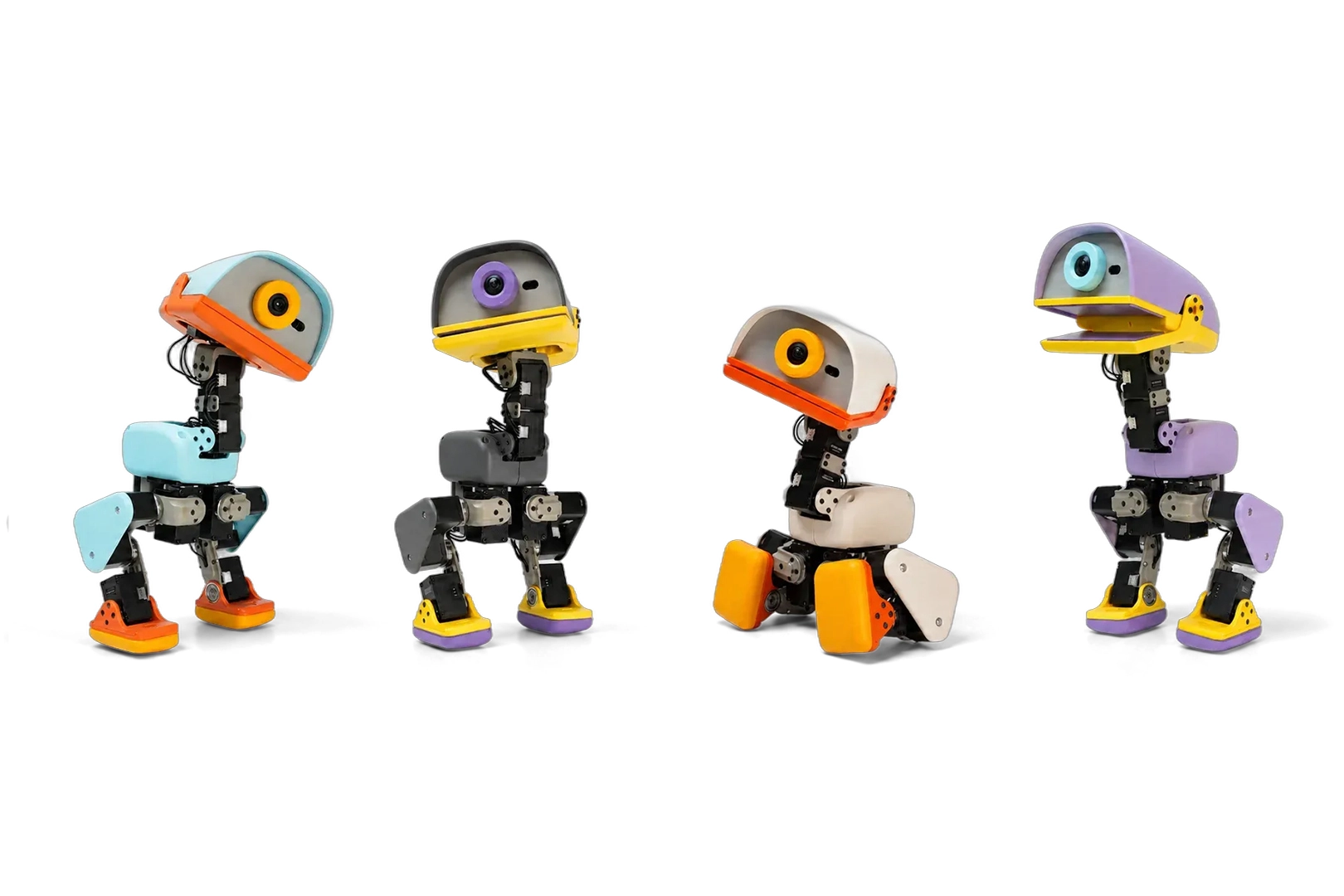
Fauna Robotics is not interested in building the perfect android. With Sprout, the company has crafted something far more nuanced: a robot engineered for emotional clarity. Expressive antenna-style brows, looping LED animations, and a tactile, almost toy-like shell transform what could be cold research hardware into a genuine domestic presence. This is a machine comfortable at a desk, gliding past furniture, responding to the cadence of human voice. The design directly confronts what the industry calls the deployment gap, where robots built for factory floors prove too stiff, both mechanically and socially, for the rhythms of home life. Sprout flips that script entirely. Here, safety becomes an aesthetic statement. Padded contours, restrained grip strength, and compact dimensions position it less as industrial tool, more as considerate cohabitant. Beneath the approachable exterior lies genuine technical infrastructure: spatial mapping, autonomous navigation, embodied AI systems. Yet the interface remains rooted in gesture, posture, and gaze. While much of the humanoid space obsesses over payload capacity and brute strength, Sprout belongs to an emerging cohort rethinking the question entirely, asking not what robots can carry, but how they should meet our eyes.